
Saraf College LMS
Skip course categories
Course categories
Skip available courses
Available courses
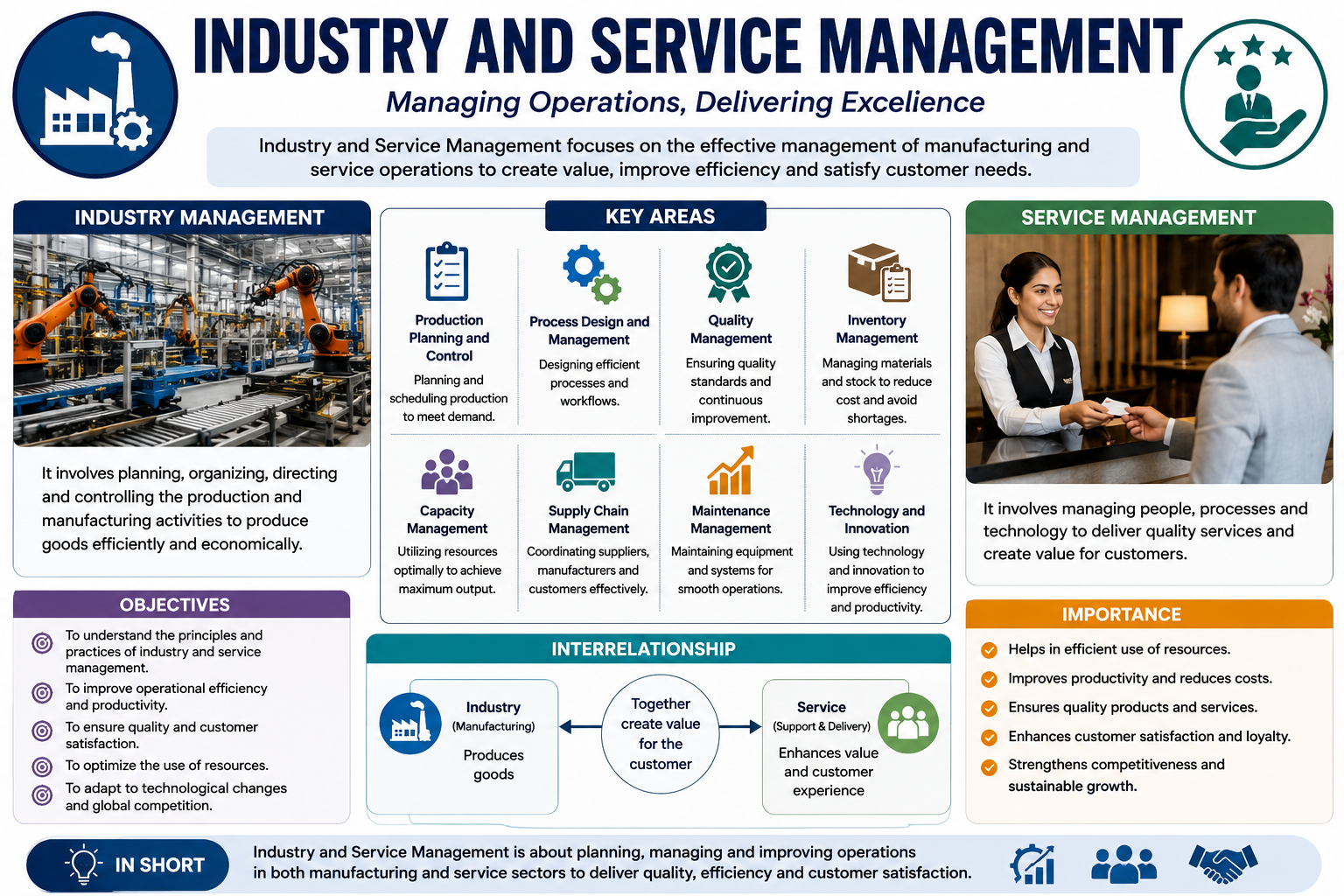
The Industry and Service Management course provides students with a comprehensive understanding of the principles and practices involved in managing manufacturing and service operations. The course introduces key concepts such as production planning and control, process design, quality management, inventory management, capacity utilization, supply chain management, and service delivery systems. It also highlights the growing importance of the service sector, customer satisfaction, operational efficiency, and technology in today's business environment. Through real-world examples and case studies, students develop the knowledge and skills required to analyze, plan, and improve industrial and service operations in a dynamic business environment
- Teacher: Simmi Mulgaonkar

The Fundamentals of Advertising course introduces students to the basic concepts, principles, and practices of advertising as an essential tool of marketing communication. It helps students understand the role of advertising in creating awareness, influencing consumer behaviour, and building brand value. The course covers the advertising communication process, types of advertising, media selection, advertising agencies, campaign planning, traditional and digital media, and the social and ethical aspects of advertising. Through practical examples and case studies, students develop an understanding of how effective advertisements are created and evaluated in today's competitive business environment.
- Teacher: Preeti Jha
- Teacher: Simmi Mulgaonkar

This subject introduces students to the basic principles and techniques of legal drafting, focusing on the correct format, structure, and language of various legal documents commonly used in business and professional settings. Students will learn to draft simple legal documents such as notices, affidavits, contracts, agreements, and declarations with clarity and legal accuracy. Emphasis is placed on understanding legal terminology, logical organization, and compliance with legal standards. The subject aims to build foundational skills in legal writing that are essential for careers in commerce, banking, insurance, and management.
- Teacher: Ruddhi Wadadekar
|
Getting Started with Excel: Interface, Workbook, Worksheets, Cells, Formatting Formulas and Functions: Mathematical, Text, Logical, Financial, Lookup Functions Data Tools: Sorting, Filtering, Data Validation, Conditional Formatting and Introduction to data cleaning |
- Teacher: Laxman Choudhary
The Operating System course provides students with a comprehensive understanding of the fundamental concepts and functions of an Operating System. It covers the definition and role of an Operating System, Operating System operations, and its major functions such as process management, memory management, file management, I/O management, resource allocation, and protection. The course also introduces the concept of processes and threads, including process scheduling, operations on processes, and Interprocess Communication (IPC). Students learn about process synchronization and the challenges of concurrent execution, including race conditions, the Critical-Section Problem, Peterson’s Solution, Semaphores, Classic Synchronization Problems, and Monitors. The course further focuses on CPU Scheduling, covering basic scheduling concepts, scheduling criteria, and major scheduling algorithms such as FCFS, SJF, SRTF, Priority Scheduling, Round Robin, Multilevel Queue Scheduling, and Multilevel Feedback Queue Scheduling. Overall, the course enables students to understand how Operating Systems manage processes, resources, and CPU execution efficiently and apply various scheduling and synchronization techniques to solve practical problems.
- Teacher: Sharad Mishra
Indian Knowledge Systems (IKS) refer to the indigenous and ancient knowledge traditions of India that evolved through centuries, rooted in Vedic literature and cultural practices. It includes fields like Ayurveda (medicine), Alchemy, Mathematics, governance (Arthashastra), Arts (Natyashastra), Yoga, Education, Trade, and Commerce. The ancient Indian education system flourished through Gurukuls, Pathshalas, and renowned universities like Nalanda. British colonial rule, especially Macaulay’s Education Policy, disrupted these systems. However, IKS holds universal value and continues to offer insights into sustainable living, scientific thought, and cultural identity. It promotes holistic development, blending spiritual, intellectual, and practical knowledge. Revisiting rituals, heritage sites, and regional traditions helps in understanding the scientific reasoning and societal relevance behind them. IKS remains vital in shaping contemporary Indian education and innovation.
- Teacher: Sonali Khade
- Teacher: Rupal Chudasama
- Teacher: Mehrab Khan
- Teacher: Megha Yadav

This course provides a foundational understanding of business, its
environment, and strategic operations. It covers the traditional and
modern concepts of business, corporate social responsibility, and
the internal and external business environment. Students will learn
about project planning, business strategies in the context of
liberalization and globalization, and the essentials of
entrepreneurship. The course also explores the role of the
government in promoting entrepreneurship through various schemes
and institutions, with a focus on digital and women
entrepreneurship.
- Teacher: Mehrab Khan
- Teacher: Ramkrishna Shikhare
Foundation course - I provides an understanding of the patterns of disparity and inter-group conflicts in Indian society. It appreciates the unity in diversity of Indian society. The course fosters an awareness of the moral value, ethical principles and makes students conscious of their duties, responsibilities and role towards the society. It will help students to become agents of positive change in society.
- Teacher: Sonali Khade
- Teacher: seema agarwal
- Teacher: Rajkumar Jaiswal
- Teacher: Yogita Naik
|
This course is designed to provide hands-on training in Microsoft Excel from basic to intermediate level. It equips learners with data management, analytical, and visualization skills through Excel tools. The course emphasizes real-world applications with a practice-based approach. |
- Teacher: Niyati Kalyanpur
- Teacher: shraddha kokate
हिंदी राजभाषा होने के साथ-साथ भारत में बोली जाने वाली एक प्रमुख भाषा है। भारत के अधिकांश निवासी और यहाँ तक कि भारत के बाहर बसने वाले भारतवासी भी अपने दैनिक आपसी वार्तालाप, कार्य-व्यवहार में हिंदी भाषा का ही प्रयोग करते हैं। विश्व की प्रमुख पाँच भाषाओं के अंतर्गत हिंदी का अस्तित्व है, इस दृष्टि से हिंदी को लेकर विभिन्न प्रकार के कौशल सीखे और सिखाए जा सकते हैं। विद्यार्थियों के लिए हिंदी एक सामान्य भाषा होने के साथ विशेष भाषा तब बन जाती है, जब वह हिंदी के माध्यम से अपने कौशल में अभिवृद्धि करें, हिंदी के माध्यम से रोजगार के कई अवसरों को प्राप्त करें। इस दृष्टि से पाठ्यक्रम अत्यंत लाभवर्धक और उपयोगी सिद्ध होगा। हिंदी भाषा में कौशल विकास की असीम संभावनाएँ हैं और कौशल के विभिन्न आयाम जुड़े हुए हैं, जो अलग-अलग दिशाओं में देखे जा सकते हैं। पाठ्यक्रम विद्यार्थियों में लेखन, वाचन कौशल की अभिवृद्धि करने के साथ रोजगारपरक अवसर प्रदान करता है।
- Teacher: pushpa pandey

Interpret economic problems using microeconomic principles and relate them to real-life market situations. Demonstrate the ability to assess consumer choice and satisfaction through utility and indifference curve analysis. Differentiate between various production and cost concepts and use them for business decision-making. Compare and assess different market structures on the basis of pricing, output decisions, and economic efficiency.
- Teacher: Kunjan Nansi
- Teacher: Prachi Pandey
हिंदी राजभाषा होने के साथ-साथ भारत में बोली जाने वाली एक प्रमुख भाषा है। भारत के अधिकांश निवासी और यहाँ तक कि भारत के बाहर बसने वाले भारतवासी भी अपने दैनिक आपसी वार्तालाप, कार्य-व्यवहार में हिंदी भाषा का ही प्रयोग करते हैं। विश्व की प्रमुख पाँच भाषाओं के अंतर्गत हिंदी का अस्तित्व है, इस दृष्टि से हिंदी को लेकर विभिन्न प्रकार के कौशल सीखे और सिखाए जा सकते हैं। विद्यार्थियों के लिए हिंदी एक सामान्य भाषा होने के साथ विशेष भाषा तब बन जाती है, जब वह हिंदी के माध्यम से अपने कौशल में अभिवृद्धि करें, हिंदी के माध्यम से रोजगार के कई अवसरों को प्राप्त करें। इस दृष्टि से पाठ्यक्रम अत्यंत लाभवर्धक और उपयोगी सिद्ध होगा। हिंदी भाषा में कौशल विकास की असीम संभावनाएँ हैं और कौशल के विभिन्न आयाम जुड़े हुए हैं, जो अलग-अलग दिशाओं में देखे जा सकते हैं। पाठ्यक्रम विद्यार्थियों में लेखन, वाचन कौशल की अभिवृद्धि करने के साथ रोजगारपरक अवसर प्रदान करता है।
- Teacher: Preeti Jha
- Teacher: Ramson Menezes
- Teacher: Rupa Shah

This course introduces students to the
fundamental concepts of financial
literacy and personal financial planning.
It aims to develop the ability to
understand income, expenses, savings,
budgeting, and financial planning at an
individual level. The course emphasizes
practical skills such as preparing
personal financial statements, setting
financial goals, managing financial risks,
and understanding basic financial
products. Through real-life examples and
case studies, students are encouraged to
make informed and responsible financial
decisions in their personal and
professional lives.
- Teacher: Rupal Chudasama
- Teacher: Mehrab Khan
- Teacher: Megha Yadav

The course Fundamentals of Cost and Management Accounting introduces students to the basic concepts and objectives of cost and management accounting. It covers preparation of cost sheets, reconciliation of costing and financial profits, and techniques of financial statement analysis such as vertical, common size, comparative balance sheets, and trend analysis. The course also focuses on the analysis and interpretation of financial ratios to evaluate the financial performance and position of an organization. Overall, the course develops the ability to analyze cost and financial data for effective managerial planning, control, and decision-making.
- Teacher: Anju Bohra
- Teacher: Rupal Chudasama
- Teacher: Megha Yadav
Indian Knowledge System (IKS) refers to the rich body of knowledge developed in India over thousands of years in areas such as economics, trade, management, ethics, governance, agriculture, mathematics, and social organisation. In Commerce, IKS helps students understand how traditional Indian ideas can be connected with modern business practices.
- Teacher: Preeti Jha

Direct & Indirect Taxation – Semester V is designed to provide students with a comprehensive understanding of the fundamental principles and practical application of the Indian taxation system. The course focuses primarily on the provisions of the Income Tax Act relating to the computation of taxable income of individuals under various heads of income, along with deductions, exemptions, and the computation of total income. Students also develop an understanding of the concepts of tax planning and tax compliance.
The course enables learners to acquire practical skills in computing tax liability through numerical problems and case-based learning. Emphasis is placed on the interpretation and application of statutory provisions, helping students understand how taxation affects individuals and businesses in real-life situations. The subject also serves as a strong foundation for advanced studies in taxation, auditing, finance, and professional courses such as CA, CMA, and CS.
The Semester V syllabus broadly covers:
- Basic concepts and terminology under the Income Tax Act.
- Scope of Total Income and Residential Status.
- Computation of income under various heads:
- Salary
- Income from House Property
- Profits and Gains of Business or Profession
- Capital Gains
- Income from Other Sources
- Exemptions and deductions available under the Income Tax Act.
- Computation of Total Income and Tax Liability of an Individual.
- Introduction to practical taxation through numerical problems and case studies.
- Teacher: gurunathan pillai
- Teacher: Swati Sharma
- Teacher: Shweta Singh
- Teacher: seema agarwal
- Teacher: Yogita Naik

This subject introduces students to the basic principles and techniques of legal drafting, focusing on the correct format, structure, and language of various legal documents commonly used in business and professional settings. Students will learn to draft simple legal documents such as notices, affidavits, contracts, agreements, and declarations with clarity and legal accuracy. Emphasis is placed on understanding legal terminology, logical organization, and compliance with legal standards. The subject aims to build foundational skills in legal writing that are essential for careers in commerce, banking, insurance, and management.
- Teacher: Ruddhi Wadadekar
हिंदी राजभाषा होने के साथ-साथ भारत में बोली जाने वाली एक प्रमुख भाषा है। भारत के अधिकांश निवासी और यहाँ तक कि भारत के बाहर बसने वाले भारतवासी भी अपने दैनिक आपसी वार्तालाप, कार्य-व्यवहार में हिंदी भाषा का ही प्रयोग करते हैं। विश्व की प्रमुख पाँच भाषाओं के अंतर्गत हिंदी का अस्तित्व है, इस दृष्टि से हिंदी को लेकर विभिन्न प्रकार के कौशल सीखे और सिखाए जा सकते हैं। विद्यार्थियों के लिए हिंदी एक सामान्य भाषा होने के साथ विशेष भाषा तब बन जाती है, जब वह हिंदी के माध्यम से अपने कौशल में अभिवृद्धि करें, हिंदी के माध्यम से रोजगार के कई अवसरों को प्राप्त करें। इस दृष्टि से पाठ्यक्रम अत्यंत लाभवर्धक और उपयोगी सिद्ध होगा। हिंदी भाषा में कौशल विकास की असीम संभावनाएँ हैं और कौशल के विभिन्न आयाम जुड़े हुए हैं, जो अलग-अलग दिशाओं में देखे जा सकते हैं। पाठ्यक्रम विद्यार्थियों में लेखन, वाचन कौशल की अभिवृद्धि करने के साथ रोजगारपरक अवसर प्रदान करता है।
- Teacher: pushpa pandey
This course introduces learners to the
fundamentals of accounting and their
application in the computerized
environment using TallyPrime. It covers
accounting concepts, double-entry
system, Golden Rules of Accounting,
company creation, chart of accounts,
voucher entry, banking operations, MIS
reports, and data security features. The
course emphasizes hands-on practical
training to enable learners to record
business transactions, manage banking
transactions, and generate financial
reports efficiently.
- Teacher: Jaya Nahata
The primary objectives of this course are to:
-
To provide conceptual clarity about structure and functioning of the Indian banking system.
-
To understand traditional and digital banking operations.
-
To examine technological innovations and FinTech integration in banking.
-
To develop awareness about banking risks, cybersecurity, and regulatory safeguards.
-
To enhance employability skills in the modern banking and financial system.
- Teacher: Nikita Rastogi
This course cultivates essential analytical skills by grounding students in the NEP-aligned principles of scarcity, choice, and marginal analysis for rational decision-making. Through a deep dive into consumer behavior and production functions, learners bridge the gap between theoretical welfare analysis and practical business applications. It develops critical proficiency in cost-output relationships and diverse market structures, empowering students to identify inefficiencies like deadweight loss in real-world economies. By integrating numerical accuracy with conceptual clarity, the curriculum meets NAAC’s quality benchmarks for academic excellence and multidisciplinary professional readiness. Ultimately, this pathway prepares undergraduate students for higher studies and strategic roles by transforming economic theory into a robust toolkit for global competitiveness
- Teacher: Urvi Pillai
Module 1
Indian Contract Act, 1872 & Sale of Goods Act, 1930
Chapter 1: Indian Contract Act, 1872
Introduction
The Indian Contract Act, 1872 is one of the oldest and most important commercial laws in India. It provides the legal framework for making, performing, and enforcing contracts. Since business transactions involve agreements between individuals, firms, companies, and government bodies, this Act plays a vital role in ensuring certainty, fairness, and legal protection in commercial dealings.
The Act was enacted by the Imperial Legislative Council during British rule and came into force on 1 September 1872. Before this Act, there was no uniform law governing contracts in India. Different regions followed different customs and legal principles, leading to uncertainty in commercial transactions. The Indian Contract Act standardized these rules and established a common legal framework applicable throughout the country.
Today, the Act continues to govern contracts in India, although some of its provisions have been supplemented or replaced by special laws such as the Sale of Goods Act, 1930, the Partnership Act, 1932, and the Limited Liability Partnership Act, 2008.
Meaning of Contract
The word "Contract" is derived from the Latin word Contractus, which means to draw together or to make an agreement.
A contract is a legally enforceable agreement between two or more parties. It creates legal rights and obligations, requiring each party to perform the promises made.
According to Section 2 of the Indian Contract Act, 1872:
"A contract is an agreement enforceable by law."
This definition highlights two essential components:
1. There must first be an agreement.
2. The agreement must be recognized and enforceable by law.
Thus,
Contract = Agreement + Legal Enforceability
Meaning of Nature of Contract
The Nature of Contract refers to the basic characteristics, legal features, and essential elements that make an agreement legally binding and enforceable under the Indian Contract Act, 1872. It explains what a contract is, how it is formed, its legal effect, and the rights and obligations it creates between the parties.
A contract is not merely a promise or understanding between two persons. It is an agreement that the law recognizes and enforces. If one party fails to perform the contractual obligations, the other party has the right to seek legal remedies through a court of law.
· Agreement: A mutual understanding between two or more parties.
· Legal Enforceability: The agreement is recognized by law and can be enforced through legal action if breached.
Nature of a Contract
The nature of a contract defines its legal character, identity, and the essential characteristics that make an agreement legally binding.
1. Legal Enforceability (The Core Distinction)
The most critical aspect of a contract's nature is captured in Section 2 of the Act: "An agreement enforceable by law is a contract."
Ø Agreement vs. Contract: Every contract is an agreement, but not every agreement is a contract.
Ø The Formula: Agreement + Legal Enforceability = Contract.
Ø If the law cannot enforce the promise, it remains a bare agreement (like a social invitation) with no legal nature.
2. Creation of Legal Obligations
The nature of a contract requires that the parties explicitly intend to create legal consequences.
Ø Social/Domestic Agreements: Agreements between family members or friends (e.g., promising a child a reward for good grades) lack a legal nature because there is no intent to sue if the promise is broken.
Ø Commercial Agreements: In business transactions, the law automatically presumes that the parties do intend to create legal relations.
3. Right Against a Person
A contract creates a right in personam, which means it creates rights and duties only between the specific parties who signed the agreement.
Ø If Party A breaks a contract with Party B, Party B can only sue Party A.
Ø This is different from a right in rem, A right in rem (Latin for "right against the thing") is a legal right enforceable against the whole world. It attaches to a specific piece of property or a legal status, imposing a universal duty on everyone to respect that right. (such as property ownership rights).
4. Consensus ad Idem (Meeting of the Minds)
The nature of a contract is completely consensual. Under Section 13, there must be consensus ad idem, meaning both parties must agree on the exact same thing in the exact same sense. Without genuine, mutual consent, a contract cannot validly exist.
5. Voluntariness and Autonomy (right to govern their own affairs)
Contracts are a product of private autonomy. The law does not force individuals into contracts; parties voluntarily choose to create their own private laws, rules, and consequences. The role of the court is simply to enforce what the parties voluntarily agreed upon, provided it does not violate public policy.
Essential Elements of a Valid Contract
1. Offer and Acceptance
2. Intention to create legal relationship
3. Lawful Consideration
4. Competency of parties
5. Free Consent
6. Lawful Object
7. Certainty of terms
8. Possibility of performance
9. Not expressly declared void
10. Compliance with legal formalities (where required)
Essential Elements of a Valid Contract
1. Offer and Acceptance
A valid contract begins with a lawful offer made by one party and its unconditional acceptance by another. The acceptance must correspond exactly with the terms of the offer and be communicated to the offeror.
Example: A offers to sell his car to B for ₹5,00,000, and B accepts the offer. A valid agreement is formed.
2. Intention to Create Legal Relationship
The parties must intend that their agreement should create legal obligations. Generally, business and commercial agreements are presumed to have legal intention, whereas social or domestic agreements are not.
Example: An agreement between a supplier and a retailer to supply goods creates legal obligations.
3. Lawful Consideration
Consideration means something of value exchanged between the parties in return for a promise. It may be money, goods, services, or an act. The consideration must be lawful and not forbidden by law.
Example: A sells a laptop to B for ₹40,000. The laptop and the money are lawful consideration.
4. Competency of Parties
According to Section 11 of the Indian Contract Act, the parties entering into a contract must:
Ø Be 18 years or above (major),
Ø Be of sound mind, and
Ø Not be disqualified by law.
A contract entered into by a minor or a person of unsound mind is generally not valid.
5. Free Consent
Consent is said to be free when it is not obtained by coercion, undue influence, fraud, misrepresentation, or mistake (where applicable). Free consent ensures that both parties enter into the contract voluntarily.
Example: If A threatens B to sign an agreement, B's consent is not free, and the contract is voidable.
6. Lawful Object
The object (purpose) of the contract must be lawful. An agreement made for an illegal, immoral, or fraudulent purpose, or one opposed to public policy, is void.
Example: A contract for the sale of books is valid, whereas a contract to smuggle prohibited goods is void.
7. Certainty of Terms
The terms and conditions of the contract must be clear, definite, and certain. Vague or ambiguous agreements cannot be enforced by law.
Example: "I will sell my car for ₹5,00,000" is certain, whereas "I will sell my car for a reasonable price" is uncertain.
8. Possibility of Performance
The act promised under the contract must be possible to perform. Agreements to do impossible acts are void.
Example: A contract to supply 100 computers is valid, but a contract to bring a deceased person back to life is void because it is impossible to perform.
9. Not Expressly Declared Void
The agreement must not belong to the category of agreements that the Indian Contract Act expressly declares void. Such agreements have no legal effect.
Examples include:
Ø Agreements in restraint of marriage
Ø Agreements in restraint of trade
Ø Wagering agreements
Ø Uncertain agreements
10. Compliance with Legal Formalities (Where Required)
Certain contracts are valid only if they comply with legal formalities, such as being in writing, properly stamped, registered, or witnessed, where the law requires these formalities.
Example: Certain transactions involving immovable property must be executed through a registered document as required by the applicable law.
Consideration
Under Section 2(d) of the Indian Contract Act, 1872, consideration is the price paid for a promise. It is the essential legal element of quid pro quo ("something for something"), meaning a contract cannot exist without a mutual exchange of value
Meaning
Section 2(d):
Consideration means something in return for a promise.
Example:
A agrees to sell a laptop to B for ₹40,000.
· Laptop = Consideration for B
· ₹40,000 = Consideration for A
Essentials of Valid Consideration
· Must move at the desire of the promisor.
· May move from promisee or any other person.
· May be past, present or future.
· Must be real.
· Need not be adequate.
· Must be lawful.
Key Essentials of Valid Consideration
1. Must move at the desire of the promisor: Third-party acts done without the promisor's explicit request do not constitute valid consideration.
2. May move from the promisee or any other person: India allows a stranger to consideration to sue, meaning someone else can pay the price on your behalf.
- Must have value in the eyes of law: The value must be real and definite, not vague, physically impossible, or illusory.
- Need not be adequate: The court will not evaluate if the price is fair; a luxury car sold for ₹10 is legally valid as long as consent is free.
- Must be lawful: The exchange cannot involve illegal acts, immorality, or opposition to public policy.
"No Consideration, No Contract"
Exceptions
· Agreement based on natural love and affection
· Promise to compensate voluntary services
· Promise to pay time-barred debt
· Completed gift
· Agency
· Charitable subscriptions (under certain conditions)
The Rule of "No Consideration, No Contract"
Section 25 establishes that an agreement made without consideration is void However, the Act provides strict legal exceptions where a contract remains fully valid even with zero consideration:
1. Natural Love and Affection: A written and registered agreement based on natural love between near relatives is enforceable.
2. Past Voluntary Service: A promise to compensate someone who has already voluntarily done something for the promisor.
3. Time-Barred Debt: A written, signed promise to pay a debt that is legally unrecoverable due to limitation laws.
4. Completed Gifts: The rule does not affect validity of any gift actually made and delivered between a donor and donee.
Important Definitions (Section 2)
1. Offer 2(a): An offer refers to a promise that is dependent on a certain act, promise, or forbearance given in exchange for the initial promise.
2. Acceptance 2(b): When the person to whom the proposal is made, signifies his assent there to, the proposal is said to be accepted.
3. Promise 2(b): A proposal when accepted becomes a promise. In simple words, when an offer is accepted it becomes promise.
4. Promisor and Promisee 2(c): When the proposal is accepted, the person making the proposal is called as promisor and the person accepting the proposal is called as promisee.
5. Consideration 2(d): When at the desire of the promisor, the promisee or any other person has done or abstained from doing or does or abstains from doing or promises to do or to abstain from doing something such act or abstinence or promise is called a consideration for the promise. Price paid by one party for the promise of the other technical word meaning Quid pro quo which means something in return.
6. Agreement 2(e): Every promise and every set of promises forming the consideration for each other.
7. Reciprocal Promises 2(f): Promises which form the consideration and part of the consideration for each other are called 'reciprocal promises'.
8. Void agreement 2(g): An agreement not enforceable by law is void.
9. Contract 2: An agreement enforceable by law is a contract. Therefore, there must be an agreement and it should be enforceable by law.
10. Voidable contract 2(i): An agreement is a voidable contract if it is enforceable by law at the option of one or more of the parties there to (i.e. the aggrieved party), and it is not enforceable by law at the option of the other or others.
11. Void contract 2(j): A contract becomes void when it ceases to be enforceable by law.
Capacity to Contract under the Indian Contract Act, 1872
Introduction
The capacity to contract refers to the legal ability of a person to enter into a valid contract. According to Section 11 of the Indian Contract Act, 1872, every person is competent to contract who:
- Has attained the age of majority.
- Is of sound mind.
- Is not disqualified from contracting by any law to which he is subject.
A contract made by a person who does not possess contractual capacity is either void or unenforceable.
1. Persons Competent to Contract
Under Section 11, the following persons are competent to enter into a contract:
A. Major Persons
A person who has attained the age of 18 years is considered a major under the Indian Majority Act, 1875.
Example: A 25-year-old person purchasing a car enters into a valid contract.
B. Persons of Sound Mind
A person is of sound mind if, at the time of making the contract:
- He can understand the contract.
- He can form a rational judgment regarding its effect on his interests.
C. Persons Not Disqualified by Law
A person should not be prohibited by any law from entering into contracts.
2. Persons Incompetent to Contract
The following persons are not competent to contract:
A. Minor
A minor is a person who has not attained the age of 18 years.
Legal Position of Minor's Agreement
The landmark case Mohori Bibee v. Dharmodas Ghose established that:
- A minor's agreement is void ab initio (void from the beginning).
- It cannot be ratified upon attaining majority.
- No estoppel applies against a minor.
Rules Regarding Minor's Agreements
1. Agreement is Void
Any agreement entered into by a minor is void.
2. No Ratification
A contract entered into during minority cannot be validated by ratification after attaining majority.
3. Beneficial Contracts are Valid
A minor can be a beneficiary.
Example: A minor can receive a gift or inheritance.
4. Minor as an Agent
A minor may act as an agent but cannot be held personally liable.
5. Minor Cannot be Adjudged Insolvent
Since a minor is not personally liable for debts.
6. Liability for Necessaries
Under Section 68, a person supplying necessaries suited to the minor's condition in life can recover the cost from the minor's property.
Examples of Necessaries:
- Food
- Clothing
- Education
- Medical treatment
B. Persons of Unsound Mind
According to Section 12, a person is of sound mind if he can understand the contract and form a rational judgment about its effect.
Persons Included
1. Lunatics
Persons suffering from mental illness.
- Contracts made during periods of insanity are void.
- Contracts made during lucid intervals are valid.
2. Idiots
Persons who have never possessed understanding from birth.
Their agreements are void.
3. Drunken or Intoxicated Persons
Contracts entered into while intoxicated are void if the person cannot understand the nature and consequences of the transaction.
C. Persons Disqualified by Law
Certain persons are prohibited from entering into contracts.
1. Alien Enemies
Citizens of a country at war with India cannot enter into contracts during the war without government permission.
2. Convicts
A convict serving a prison sentence cannot enter into contracts during imprisonment.
3. Insolvents
An adjudged insolvent loses the right to deal with his property, which vests in the official receiver.
4. Foreign Sovereigns and Ambassadors
They enjoy diplomatic immunity and cannot be sued without government consent.
5. Companies
A company can contract only within the powers granted by its Memorandum of Association.
6. Corporations and Statutory Bodies
They can enter into contracts only within the scope of powers conferred by law.
4. Free Consent
Section 13
Consent means parties agree upon the same thing in the same sense.
Consent is free when not caused by:
1. Coercion
2. Undue Influence
3. Fraud
4. Misrepresentation
5. Mistake
(a) Coercion (Section 15)
Committing or threatening any act forbidden by IPC (now generally understood under the corresponding provisions of the Bharatiya Nyaya Sanhita) or unlawful detention of property.
Effect:
Contract is voidable.
(b) Undue Influence (Section 16)
One party dominates the will of another.
Examples:
Doctor–Patient
Parent–Child
Guardian–Ward
Effect:
Voidable.
(c) Fraud (Section 17)
Intentional deception.
Examples:
False statement
Active concealment
False promise
Effect:
Voidable.
(d) Misrepresentation (Section 18)
False statement made honestly.
Effect:
Voidable.
Difference from Fraud
No intention to deceive.
(e) Mistake
Bilateral Mistake
Both parties mistaken.
Effect:
Void.
Unilateral Mistake
Generally does not affect validity.
- Teacher: Seema Hanchate
- Teacher: Bhumika Shah
This course provides an in-depth understanding of project
management concepts, tools, and techniques specifically
applied to the banking and financial services sector.
Students will learn how banks plan, implement, monitor,
and evaluate various financial, operational, and
technological projects. The course emphasizes practical
skills, including project planning, risk assessment,
resource allocation, and the use of modern project
management frameworks to ensure effective execution of
banking projects.
- Teacher: Nikita Rastogi
This course is designed to provide hands-on training in
Microsoft Excel from basic to intermediate level. It equips
learners with data management, analytical, and visualization skills through Excel tools. The course emphasizes real-world applications with a practice-based approach
- Teacher: Mamta Chhajer
- Teacher: Laxman Choudhary
- Teacher: Yogita Mahimkar
CHAPTER 1
Introduction to Auditing
1. Definition, Nature and Scope of Auditing
Meaning of Auditing
Auditing is a systematic and independent examination of the books of accounts, financial records, vouchers, and financial statements of an organization to determine whether they present a true and fair view of its financial position and performance.
Definitions
Spicer and Pegler
"An audit is an examination of books of accounts and vouchers of a business in order to enable the auditor to satisfy himself that the Balance Sheet is properly drawn up so as to exhibit a true and fair view of the state of affairs of the business."
Institute of Chartered Accountants of India (ICAI)
"Auditing is the independent examination of financial information of any entity, whether profit-oriented or not, irrespective of its size or legal form, when such an examination is conducted with a view to expressing an opinion thereon."

Nature of Auditing
The following are the important characteristics (nature) of auditing:
1. Independent Activity
The auditor must be independent of the management so that the audit opinion remains unbiased and reliable.
2. Systematic Examination
Auditing follows a planned and organized process based on established auditing standards and procedures.
3. Evidence-Based Process
Audit conclusions are drawn only after collecting sufficient and appropriate audit evidence.
4. Verification and Evaluation
The auditor verifies transactions, assets, liabilities, and evaluates the accounting system and internal controls.
5. Professional Judgment
Auditors apply their knowledge, experience, and professional skepticism while performing the audit.
6. Expression of Opinion
The ultimate purpose of an audit is to express an independent opinion on whether the financial statements present a true and fair view.
7. Not a Guarantee
An audit provides reasonable assurance, not absolute assurance, that the financial statements are free from material misstatement.
Scope of Auditing
The scope of auditing includes the examination of all significant financial and accounting aspects of an organization.
The scope covers:
- Examination of books of accounts.
- Verification of accounting records and supporting documents.
- Checking compliance with accounting standards and legal requirements.
- Evaluation of internal control systems.
- Verification of assets and liabilities.
- Detection of material errors and frauds.
- Examination of financial statements.
- Reporting findings to shareholders or stakeholders.
- Ensuring proper disclosure of financial information.
- Providing recommendations for improving internal controls.

Financial Statements and Users of Financial Information
· Meaning of Financial Statements
· Financial statements are formal records prepared at the end of an accounting period to communicate the financial performance and financial position of an organization.
Major Financial Statements
1. Balance Sheet
Shows the assets, liabilities, and equity of the business on a specific date.
2. Statement of Profit and Loss
Shows the income earned, expenses incurred, and net profit or loss during the accounting period.
3. Cash Flow Statement
Shows cash inflows and outflows from operating, investing, and financing activities.
4. Statement of Changes in Equity
Shows changes in shareholders' equity during the year.
5. Notes to Accounts
Provide additional explanations and disclosures regarding accounting policies and financial information.
· Users of Financial Information
· Financial information is used by both internal and external users.
· Internal Users
· Management
· Uses financial information for planning, controlling, budgeting, and decision-making.
· Employees
· Assess job security, salaries, incentives, and future growth opportunities.
· Internal Auditors
· Evaluate internal controls and operational efficiency.
·
· External Users
· Shareholders
· Evaluate profitability and return on investment.
· Investors
· Assess investment opportunities and business performance.
· Creditors and Banks
· Determine the organization's repayment capacity before granting loans.
· Government
· Uses financial statements for taxation, regulation, and policy purposes.
· Suppliers
· Assess the company's ability to make timely payments.
· Customers
· Evaluate the long-term stability of suppliers.
· Regulatory Authorities
· Ensure compliance with laws and accounting standards.
· Researchers and Analysts
· Study financial performance and industry trends.
Objects of Financial Audit

Basic objects-True & Fair view
The auditor gives an opinion on whether the final accounts give a true and fair view of the affairs of the concern. i.e. whether the balance sheet gives a true and fair view of the financial position of the concern as at the end of the year and the profit and loss account gives a true and fair view of the profit or loss for the year.
Incidental Object- Detection of Errors and frauds
3. Inherent Limitations of Audit
An audit cannot provide absolute assurance because of certain inherent limitations.
1. Use of Sampling
Auditors generally examine only selected transactions rather than every transaction.
2. Judgment-Based Decisions
Many audit conclusions depend on professional judgment rather than certainty.
3. Limitations of Internal Control
Even effective internal controls may fail because of human error, negligence, or management override.
4. Possibility of Fraud
Sophisticated fraud involving collusion or forged documents may remain undetected.
5. Time and Cost Constraints
Audits are completed within a limited time and budget, making complete verification impractical.
6. Reliance on Management
Auditors rely on representations and information provided by management.
7. Accounting Estimates
Many financial statement items involve estimates that may differ from actual outcomes.
8. Reasonable, Not Absolute Assurance
An audit provides only reasonable assurance that material misstatements are detected.
Errors and Frauds
1. Meaning of Errors and Frauds
Error
An error is an unintentional mistake committed while recording, classifying, posting, summarizing, or preparing financial statements. Errors occur due to negligence, oversight, lack of knowledge, or misunderstanding and are not made with the intention to deceive.
Fraud
A fraud is an intentional act of deception committed by one or more individuals to obtain an unfair or illegal advantage. Fraud involves deliberate misrepresentation, concealment, or manipulation of financial information.
Difference between Error and Fraud
|
Basis |
Error |
Fraud |
|
Meaning |
Unintentional mistake |
Intentional deception |
|
Mistake Intention |
Bona fide mistake No intention to deceive |
Mala fide mistake Deliberate intention to deceive |
|
Cause |
Carelessness, ignorance, oversight |
Dishonesty, personal gain |
|
Effect |
May affect financial statements unintentionally |
Causes material misstatement and financial loss |
|
Detection |
Error may be detected by going back Through the steps involved in preparing Trial Balance |
Detection of fraud involves investigation |
2. Causes of Errors
Errors may arise due to:
· Lack of accounting knowledge.
· Carelessness or negligence.
· Clerical mistakes.
· Misunderstanding of accounting principles.
· Heavy workload and fatigue.
· Incorrect calculations.
· Failure to record transactions.
· Inadequate supervision.
3. Types of Errors

Types of Frauds

Teeming and Lading
Teeming and Lading is a type of fraud in accounting where money received from one customer is used to cover the amount stolen from another customer's payment. It is also known as lapping.
Meaning
Teeming and Lading is the practice of misappropriating cash received from customers and concealing the theft by using subsequent receipts from other customers to cover the shortage.
Example
- Customer A pays ₹10,000.
- The cashier steals the ₹10,000 instead of recording it.
- Later, Customer B pays ₹10,000.
- The cashier records Customer B's payment as if it were received from Customer A.
- When Customer C pays, that payment is recorded against Customer B's account, and the cycle continues.
This creates a continuous chain of misappropriation until the fraud is detected.
Characteristics
- Involves cash receipts from debtors (customers).
- Common in organizations with weak internal controls.
- Requires continuous manipulation of accounting records.
- Usually committed by employees handling both cash receipts and accounting records.
- Teacher: Seema Hanchate
- Teacher: Urvi Pillai
हिंदी राजभाषा होने के साथ-साथ भारत में बोली जाने वाली एक प्रमुख भाषा है। भारत के अधिकांश निवासी और यहाँ तक कि भारत के बाहर बसने वाले भारतवासी भी अपने दैनिक आपसी वार्तालाप, कार्य-व्यवहार में हिंदी भाषा का ही प्रयोग करते हैं। विश्व की प्रमुख पाँच भाषाओं के अंतर्गत हिंदी का अस्तित्व है, इस दृष्टि से हिंदी को लेकर विभिन्न प्रकार के कौशल सीखे और सिखाए जा सकते हैं। विद्यार्थियों के लिए हिंदी एक सामान्य भाषा होने के साथ विशेष भाषा तब बन जाती है, जब वह हिंदी के माध्यम से अपने कौशल में अभिवृद्धि करें, हिंदी के माध्यम से रोजगार के कई अवसरों को प्राप्त करें। इस दृष्टि से पाठ्यक्रम अत्यंत लाभवर्धक और उपयोगी सिद्ध होगा। हिंदी भाषा में कौशल विकास की असीम संभावनाएँ हैं और कौशल के विभिन्न आयाम जुड़े हुए हैं, जो अलग-अलग दिशाओं में देखे जा सकते हैं। पाठ्यक्रम विद्यार्थियों में लेखन, वाचन कौशल की अभिवृद्धि करने के साथ रोजगारपरक अवसर प्रदान करता है।
- Teacher: pushpa pandey
This course provides an overview of Goods and
Services Tax (GST) in India, focusing on its concepts,
need, and applicability. It covers the scope of supply,
non-taxable supply, composition scheme, and the
principles of time, place, and value of supply for
accurate tax computation. Learners will gain practical
knowledge of Input Tax Credit (ITC), tax liability
assessment, and GST payment. The course also
explains registration procedures, required documents,
and cancellation provisions. By the end, learners will
be equipped to understand and apply GST provisions in
practical scenarios.
- Teacher: Anita Agarwal
This course introduces learners to the
fundamentals of accounting and their
application in the computerized
environment using TallyPrime. It covers
accounting concepts, double-entry
system, Golden Rules of Accounting,
company creation, chart of accounts,
voucher entry, banking operations, MIS
reports, and data security features. The
course emphasizes hands-on practical
training to enable learners to record
business transactions, manage banking
transactions, and generate financial
reports efficiently.
- Teacher: Jaya Nahata
This course provides foundational and applied knowledge of cost accounting relating to material cost, employee cost, direct expenses and overheads. It covers inventory control techniques, wage payment systems, labour turnover, and methods of allocation, apportionment and absorption of overheads. Emphasis is placed on practical problem-solving and systematic application of cost accounting procedures for accurate cost determination in business organisations. The course strengthens analytical and computational skills required in accounting and finance professions
- Teacher: Mamta Chhajer
This course provides a structured and comprehensive understanding of modern corporate reporting practices, statutory requirements and international accounting standards, which introduces corporate financial reporting by explaining its meaning, objectives and scope, along with its importance for stakeholders such as investors, regulators and management. The module also highlights the limitations of financial reporting and emphasizes the role of corporate governance in ensuring transparency and
accountability. Learners are then guided through the conceptual framework of financial reporting, covering its definition, objectives, and the fundamental elements of financial statements assets, liabilities, equity, income and expenses. The role of statutory bodies such as the Ministry of Corporate Affairs (MCA), Securities and Exchange Board of India (SEBI) and Institute of Chartered Accountants of India (ICAI) is discussed, along with Companies Act provisions, SEBI guidelines for listed companies and the influence of international regulatory bodies like IASB and IFRS Foundation. This focuses on introducing Indian Accounting Standards, their need, objectives and convergence with IFRS. It also covers Generally Accepted Accounting Principles (GAAP) in India, the applicability, interpretation, scope and
compliance of accounting standards and provides an overview of IFRS alongside the applicability of Ind AS in the Indian context. The course then progresses to deals with specific standards including Ind AS 101 (First-time adoption of Ind AS), Ind AS 1 (Presentation of Financial Statements), Ind AS 2
(Inventories), Ind AS 8 (Accounting Policies, Changes in Accounting Estimates and Errors) and Ind AS 12 (Income Taxes). This module equips learners with practical knowledge of how these standards shape corporate reporting and ensure consistency and comparability. Finally extends the learning to advanced standards such as Ind AS 16 (Property, Plant, and Equipment), Ind AS 38 (Intangible Assets), Ind AS 113 (Fair Value Measurement), and Ind AS 18/115 (Revenue Recognition). These standards are critical for understanding valuation, recognition and disclosure requirements in corporate reporting.
By the end of the course, learners will have a strong grasp of the regulatory framework governing corporate financial reporting, the application of Ind AS and IFRS, and the practical implications of accounting standards in preparing
and presenting financial statements. The course blends theoretical foundations with practical applications, making it highly relevant for students, professionals and practitioners aiming to build expertise in corporate reporting and compliance.
- Teacher: Mamta Chhajer
This course introduces students to the fundamentals of Sustainability Reporting and ESG (Environmental, Social and Governance) disclosures with special reference to Business Responsibility and Sustainability Reporting
(BRSR) in India. The course explains the relevance of sustainability reporting in modern corporate reporting, finance, auditing, compliance and investment decision-making. It builds practical understanding of sustainability indicators, materiality, reporting formats, and assurance.
The course is industry-oriented and enhances employability in roles such as ESG analyst, sustainability reporting executive, compliance associate, CSR assistant and audit trainee.
- Teacher: Anita Agarwal
- Teacher: Yogita Mahimkar
Brief questions of module 1 and case studies
- Teacher: pallavi kharote
This course provides learners with a structured and practice-oriented understanding of Direct Taxation, integrating foundational concepts with detailed study of income computation under key heads such as Salary,
House Property, Capital Gains, Business or Profession, and Other Sources, as redefined under the Income-tax Act, 2025. The course also covers deductions, rebates, reliefs, and total income computation, preparing students to interpret statutory provisions, analyse transactions, and
perform tax computations accurately for individuals. Aligned with NEP 2020, the course emphasises conceptual clarity, problem-solving skills, computational accuracy, and real-world application, ensuring that learners are equipped for professional careers in accounting, taxation, audit, consultancy, compliance, and financial planning, as well as for advanced professional examinations.
- Teacher: Yogita Mahimkar
Introduction to Financial Accounting
Financial Accounting is a fundamental branch of accounting that focuses on recording, classifying, summarising, and reporting the financial transactions of a business. It provides a systematic framework for preparing financial statements such as the Trading Account, Profit and Loss Account, and Balance Sheet. These statements help determine the profitability, financial position, and overall performance of an organisation.
This introductory chapter familiarises students with the basic concepts, objectives, functions, principles, and importance of financial accounting. It also explains the accounting process, accounting cycle, users of accounting information, and the fundamental accounting equation. A clear understanding of these concepts provides a strong foundation for studying advanced topics such as journal entries, ledger accounts, trial balance, final accounts, and financial statement analysis.
- Teacher: Dr. Lokesh Gupta

This subject introduces students to the basic principles and techniques of legal drafting, focusing on the correct format, structure, and language of various legal documents commonly used in business and professional settings. Students will learn to draft simple legal documents such as notices, affidavits, contracts, agreements, and declarations with clarity and legal accuracy. Emphasis is placed on understanding legal terminology, logical organization, and compliance with legal standards. The subject aims to build foundational skills in legal writing that are essential for careers in commerce, banking, insurance, and management.
- Teacher: Ruddhi Wadadekar
This course provides a comprehensive understanding of the Indian financial system and its key components. It begins with an overview of the financial system, covering its meaning, features, roles, and the functions it performs in the Indian economy. The course delves into the structure of the Indian financial system, including financial institutions, markets, instruments, services, and regulators, while tracing its evolution and exploring major international financial institutions. Learners will analyze the challenges faced by the Indian financial system and examine the reforms, growth, and development it has undergone. A detailed study of financial markets—including capital, money, foreign exchange, commodity, and derivative markets—is included, with a focus on their structure, sub-segments, roles, and participants. The course also covers the classification and characteristics of various financial instruments, including emerging ones. In the section on financial regulators, students will understand the need for regulation and the specific roles and powers of key regulators like the RBI, SEBI, PFRDA, IRDAI, NABARD, NHB, and the ombudsman systems in banking and insurance. This course is ideal for students seeking to build foundational knowledge in finance and understand the dynamic regulatory and institutional framework that supports India's financial system.
- Teacher: Prasanna Choudhari
हिंदी राजभाषा होने के साथ-साथ भारत में बोली जाने वाली एक प्रमुख भाषा है। भारत के अधिकांश निवासी और यहाँ तक कि भारत के बाहर बसने वाले भारतवासी भी अपने दैनिक आपसी वार्तालाप, कार्य-व्यवहार में हिंदी भाषा का ही प्रयोग करते हैं। विश्व की प्रमुख पाँच भाषाओं के अंतर्गत हिंदी का अस्तित्व है, इस दृष्टि से हिंदी को लेकर विभिन्न प्रकार के कौशल सीखे और सिखाए जा सकते हैं। विद्यार्थियों के लिए हिंदी एक सामान्य भाषा होने के साथ विशेष भाषा तब बन जाती है, जब वह हिंदी के माध्यम से अपने कौशल में अभिवृद्धि करें, हिंदी के माध्यम से रोजगार के कई अवसरों को प्राप्त करें। इस दृष्टि से पाठ्यक्रम अत्यंत लाभवर्धक और उपयोगी सिद्ध होगा। हिंदी भाषा में कौशल विकास की असीम संभावनाएँ हैं और कौशल के विभिन्न आयाम जुड़े हुए हैं, जो अलग-अलग दिशाओं में देखे जा सकते हैं। पाठ्यक्रम विद्यार्थियों में लेखन, वाचन कौशल की अभिवृद्धि करने के साथ रोजगारपरक अवसर प्रदान करता है।
- Teacher: pushpa pandey
The course provides a comprehensive understanding of the Equity Markets. The course explores the functioning of the Primary Market, including IPO mechanisms Offer for Sale (OFS), private placement, and issue management practices, role of merchant bankers, Red Herring Prospectus, ASBA, Green Shoe Option, ESOPs, Sweat Equity, and Depository Receipts like ADR, GDR and IDR.
It also provides an in-depth study of the Secondary Market, focusing on the evolution and growth of stock exchanges in India, stock market indices, dematerialization, trading, clearing and settlement processes, along with recent developments like algorithmic trading and the Social Stock Exchange.
Finally, the course emphasizes the importance of equity markets in a developing economy like India, the need for investor participation, SME IPO platforms, ESG investing, corporate governance, and the regulatory role of the Securities and Exchange Board of India.
Overall, the course equips students with conceptual clarity, analytical skills and practical insights necessary for careers in financial markets, investment advisory, and capital market services.
- Teacher: Prasanna Choudhari
Introduction to Costing and Reconciliation
This chapter provides a fundamental understanding of cost accounting, costing concepts, and the reconciliation of cost and financial accounts. It introduces students to the meaning, objectives, importance, and basic principles of costing, along with the classification and elements of cost. The chapter explains how costs are identified, measured, analysed, and allocated to determine the cost of products or services. It also introduces the concept of cost sheets and the preparation of cost information for managerial decision-making. The chapter further covers the need for reconciliation between Cost Accounts and Financial Accounts, explaining the reasons for differences in profit or loss reported under both systems. Students will learn about items such as overhead absorption, stock valuation, depreciation, interest, and other adjustments that may cause differences. Overall, the chapter develops a strong foundation in cost accounting and enables learners to understand how costing information supports cost control, cost reduction, pricing decisions, and effective business management.
- Teacher: Dr. Lokesh Gupta
This course provides students with a comprehensive understanding of intraday trading concepts, market analysis techniques, and risk management principles. It covers technical indicators, chart patterns, trading psychology, and structured intraday trading frameworks used in financial markets.
The course develops analytical skills required to interpret price movements and apply systematic trading strategies, enabling learners to adopt a disciplined and informed approach to day trading.
- Teacher: Mebin Varghese
- Teacher: Nivedita Satam
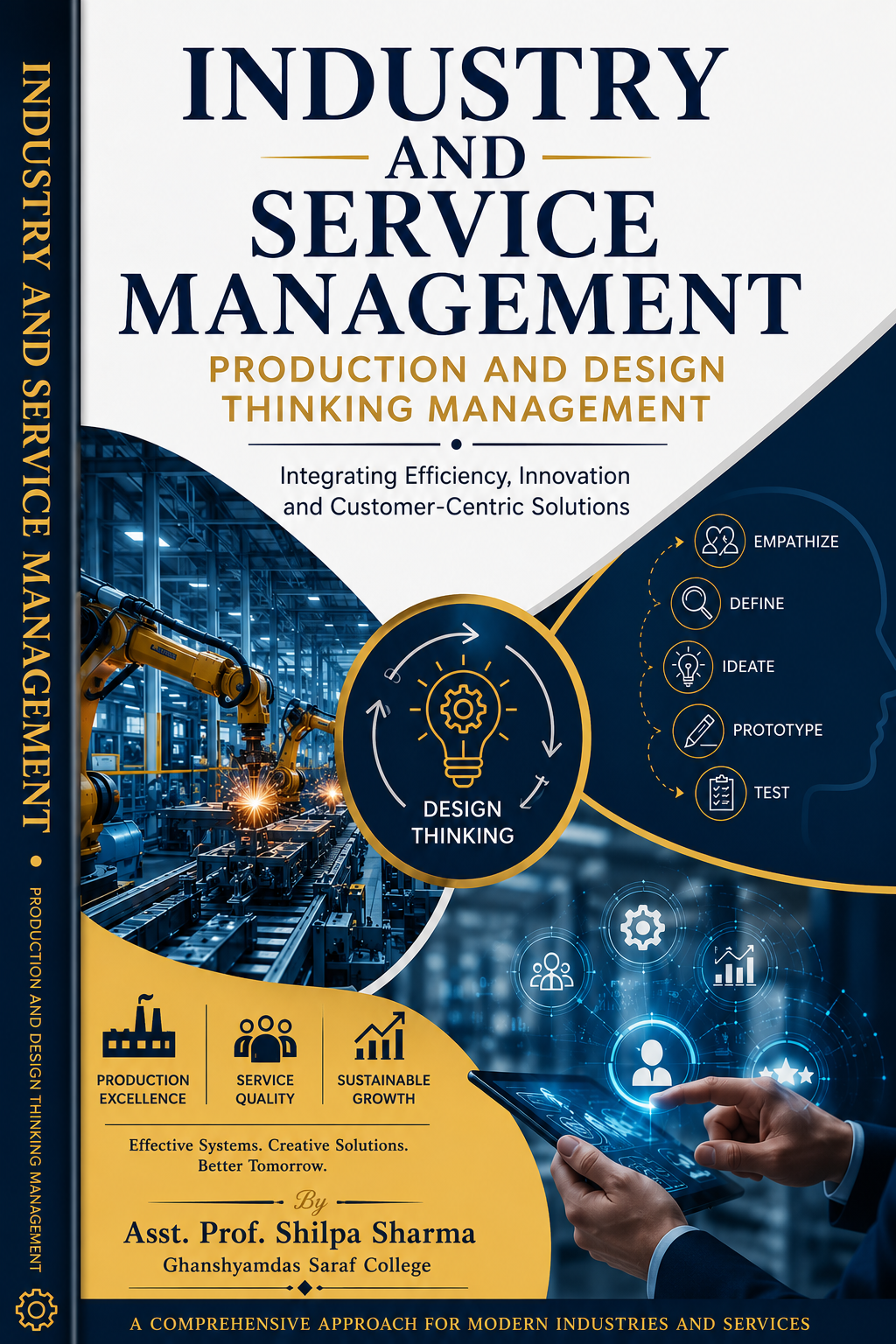
Industry and Service Management is an important area of management that focuses on the effective planning, designing, production, delivery, and continuous improvement of products and services. It combines the principles of production management, service management, operations management, and design thinking to help organizations use their resources efficiently while satisfying changing customer needs. In the present competitive business environment, organizations are required not only to produce quality products but also to provide efficient services and create valuable customer experiences. Therefore, Industry and Service Management plays an important role in achieving operational efficiency, innovation, quality, customer satisfaction, and long-term organizational success.
- Teacher: Shilpa Sharma
|
The course is designed to provide a comprehensive understanding of the basics of programming using C language. It covers a wide range of topics, from the fundamental concepts of programming to more advanced topics such as pointers, structures and file handling. It also covers core concepts of Database Management Systems (DBMS).Topics include relational models, SQL queries, normalization, and transactions. Hands-on practice ensures understanding of both programming and database concepts. |
- Teacher: shraddha kokate
- Teacher: Nivedita Satam
|
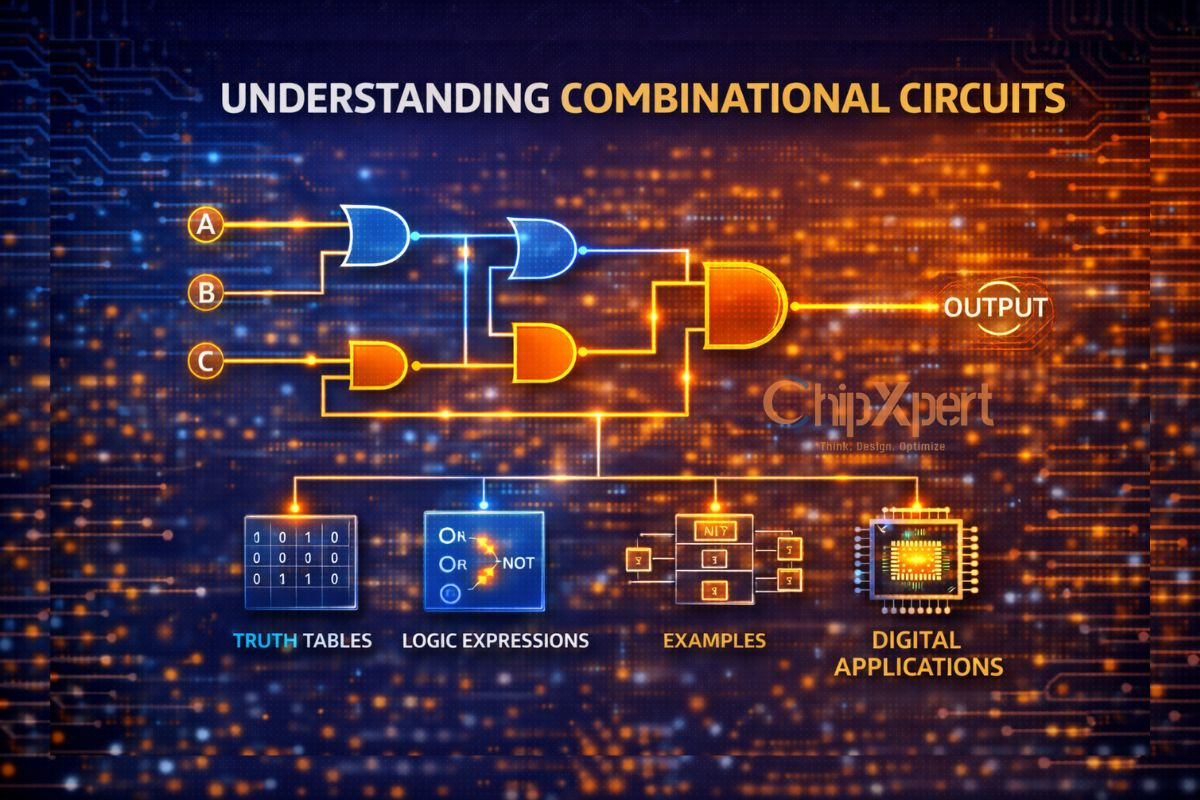
This course covers the design of combinational and sequential digital circuits. Students will apply Boolean algebra and K-map techniques for circuit optimization. It includes implementation of arithmetic, data path, and memory circuits. Practical skills are developed through simulation tools and hardware experiments. |
हिंदी राजभाषा होने के साथ-साथ भारत में बोली जाने वाली एक प्रमुख भाषा है। भारत के अधिकांश निवासी और यहाँ तक कि भारत के बाहर बसने वाले भारतवासी भी अपने दैनिक आपसी वार्तालाप, कार्य-व्यवहार में हिंदी भाषा का ही प्रयोग करते हैं। विश्व की प्रमुख पाँच भाषाओं के अंतर्गत हिंदी का अस्तित्व है, इस दृष्टि से हिंदी को लेकर विभिन्न प्रकार के कौशल सीखे और सिखाए जा सकते हैं। विद्यार्थियों के लिए हिंदी एक सामान्य भाषा होने के साथ विशेष भाषा तब बन जाती है, जब वह हिंदी के माध्यम से अपने कौशल में अभिवृद्धि करें, हिंदी के माध्यम से रोजगार के कई अवसरों को प्राप्त करें। इस दृष्टि से पाठ्यक्रम अत्यंत लाभवर्धक और उपयोगी सिद्ध होगा। हिंदी भाषा में कौशल विकास की असीम संभावनाएँ हैं और कौशल के विभिन्न आयाम जुड़े हुए हैं, जो अलग-अलग दिशाओं में देखे जा सकते हैं। पाठ्यक्रम विद्यार्थियों में लेखन, वाचन कौशल की अभिवृद्धि करने के साथ रोजगारपरक अवसर प्रदान करता है।
- Teacher: pushpa pandey
Python Programming Module 1:
Contains:
1.1. Introduction
● Overview of Python and its applications
● Installation and environment setup (IDLE, VS Code, Jupiter)
● Python syntax and structure
● Variables and data types
● Type casting
● Input/Output operations
● Operators
● Writing and executing Python scripts
1.2. Control Structure
● Conditional statements (if, elif, else)
● Looping constructs (for, while)
● Break, continue, pass
● Nested loops
1.3. Functions
● Parameters and return values
● Default & keyword arguments
Variable-length arguments (*args, **kwargs)
- Teacher: Laxman Choudhary
This course introduces the fundamental concepts, architecture, and practical implementation of embedded systems using the 8051 microcontroller. It provides students with both theoretical knowledge and hands-on experience in designing microcontroller-based real-time applications. Students learn how to program the 8051 using Embedded C and understand the process of compiling, debugging, and downloading programs into the microcontroller using flash programming tools.
Module-1 Contains:
1)Introduction to .net Framework.
2).net Core
3)C# Programming
- Teacher: Laxman Choudhary
This course introduces the concepts and applications of the Internet of Things (IoT). It covers IoT architecture, sensors, microcontrollers, communication technologies, cloud integration, and data analytics. Through practical exercises, students gain hands-on experience in designing and implementing smart connected systems using Raspberry Pi and IoT platforms for real-world applications.
The course provides an advanced and comprehensive understanding of the principles and practice of Direct Taxation in the context of the Income-tax Act, 2025 and the evolving global tax environment. It equips learners with conceptual knowledge and analytical skills required for interpreting tax legislation, evaluating tax implications of business and individual transactions. The course focuses on advanced computation of income under various heads, tax
planning strategies, exemptions, deductions, assessment procedures, compliance requirements, and recent developments in direct taxation.
- Teacher: Yogita Mahimkar
This course provides an in-depth understanding of
auditing principles, Standards on Auditing (SAs),
audit planning, evidence gathering, and reporting
responsibilities in accordance with professional
standards issued by the Institute of Chartered
Accountants of India.
The course focuses on the auditor’s ethical
responsibilities, fraud detection, compliance with
laws and regulations, audit documentation,
planning and strategy, audit evidence, sampling
techniques, related party transactions, and external
confirmations. It also examines the formation of
audit opinions and the preparation and
interpretation of audit reports in line with
applicable Standards on Auditing.
Emphasis is placed on case study analysis, audit
working papers, variance analysis, and
interpretation of audit reports to develop
analytical, professional judgment, and reporting
skills required in advanced auditing practice.
- Teacher: Anita Agarwal
This course introduces the business environment, organisational structure, corporate governance, and the role of technology in business. It covers business ethics, managing people, professional ethics, and the impact of the external environment on organisations.
- Teacher: pallavi kharote
This course introduces fundamental principles of financial accounting including accounting concepts, recording of transactions, preparation of books of accounts, trial balance and basic financial statements in accordance with accounting principles
- Teacher: Mamta Chhajer
- Teacher: pallavi kharote
- Teacher: Tanay Amin
- Teacher: Mohd Uzaif Ansari
- Teacher: Siraj Ansari
- Teacher: Ulkesh Aravandekar
- Teacher: Rohan Bansal
- Teacher: Varsha Bhardwaj
- Teacher: Aarya Bharte
- Teacher: Dhanya Billava
- Teacher: Muskan Chanda
- Teacher: Poojadevi Chaudhary
- Teacher: Prachi Chauhan
- Teacher: Niharika Choudhari
- Teacher: Mamta Choudhary
- Teacher: Pooja Choudhary
- Teacher: Stanford Coutinho
- Teacher: Neel Deshmukh
- Teacher: Kalpesh Dingwa
- Teacher: Veronica Dsouza
- Teacher: Alok Kumar Gupt
- Teacher: Aaryan Gupta
- Teacher: Anshika Gupta
- Teacher: Harsh Gupta
- Teacher: Khushi Gupta
- Teacher: Rupesh Gupta
- Teacher: Shivam Gupta
- Teacher: Afiya Halai
- Teacher: Chinmay Jain
- Teacher: Nisha Jha
- Teacher: Snehal Jha
- Teacher: Bhavika Joshi
- Teacher: Harshada Kadam
- Teacher: Kashvi Kadam
- Teacher: Khushi Kadam
- Teacher: Darsh Kamble
- Teacher: Manthan Karwa
- Teacher: Gauri Kauche
- Teacher: Amrina Khan
- Teacher: Iram Khan
- Teacher: Mohd zainul abedin Khan
- Teacher: Saima Khan
- Teacher: Sufiyan Khan
- Teacher: Bhavin Khut
- Teacher: Pranay Kodere
- Teacher: Sarthak Kolbe
- Teacher: Aruna Kumavat
- Teacher: Khushi Kumavat
- Teacher: Arya Madan
- Teacher: Minal Mahida
- Teacher: Arhan Malik
- Teacher: Reeta Kumari Mandal
- Teacher: Rimi Manna
- Teacher: Sweety Manna
- Teacher: Vishal Masulkar
- Teacher: Prachi Mhabdi
- Teacher: Vaibhavi Mhadaye
- Teacher: Aryan Mirajkar
- Teacher: Ayesha Mirza
- Teacher: Aakash Mishra
- Teacher: Ronak Mishra
- Teacher: Shreya Mishra
- Teacher: Parth Naik
- Teacher: Yogita Naik
- Teacher: Kalash Nanawati
- Teacher: Abhay Kumar Pal
- Teacher: Minakshi Pandey
- Teacher: Sejal Pandey
- Teacher: Ritika Pandit
- Teacher: Yash Pandit
- Teacher: Falak Patel
- Teacher: Yashvi Pathak
- Teacher: Bhakti Pattni
- Teacher: Tanvi Pawde
- Teacher: Mantasha Bano Qureshi
- Teacher: Richa Rai
- Teacher: Ridhi Rajpurohit
- Teacher: Mahipal Rajput
- Teacher: Priya Rane
- Teacher: Aradhana Rao
- Teacher: Falak Rathod
- Teacher: Shriya Rawool
- Teacher: Aafiya Rokadia
- Teacher: Rishita Roy
- Teacher: Sneha Sahu
- Teacher: Sundram Kumar Sahu
- Teacher: Mohit Saini
- Teacher: Shruti Sakharkar
- Teacher: Arya Salvi
- Teacher: Shubhangi Saranagat
- Teacher: Peehu Sawant
- Teacher: Alina Sayyed
- Teacher: Faiz Sayyed
- Teacher: Moksith Shah
- Teacher: Al qasaas Shaikh
- Teacher: Alia Shaikh
- Teacher: Fariha Shaikh
- Teacher: Hasnain Shaikh
- Teacher: Iqra Shaikh
- Teacher: Irfan Shaikh
- Teacher: Javeria Shaikh
- Teacher: Mariya Shaikh
- Teacher: Mohammad Zahid Shaikh
- Teacher: Mohd. Aadil Shaikh
- Teacher: Nashrah Begum Shaikh
- Teacher: Dhiraj Sharma
- Teacher: Harsh Sharma
- Teacher: Kanishka Sharma
- Teacher: Sonatan Shaw
- Teacher: Galwin Shetty
- Teacher: Prajnesh Shetty
- Teacher: Akshata Shinde
- Teacher: Prachi Shinde
- Teacher: Ashwin Singh
- Teacher: Kartik Singh
- Teacher: Nishita Singh
- Teacher: Shriyans Singh
- Teacher: Diya Solanki
- Teacher: Pravinkumar Suthar
- Teacher: Bhagyashree Swami
- Teacher: Sahil Tambe
- Teacher: Aditya Thakur
- Teacher: Dhairye Tiwari
- Teacher: Manasi Tiwari
- Teacher: Naman Tiwari
- Teacher: Krishna Vaishnav
- Teacher: Krishna Vaishnav
- Teacher: Devyani Varma
- Teacher: Anjali Vishwakarma
- Teacher: Mansi Vishwakarma
- Teacher: Shreya Vishwakarma
- Teacher: Tripti Vishwakarma
- Teacher: Karishma Vishwkarma
- Teacher: Nikunj Vyas
- Teacher: Pratham Vyavaharkar
- Teacher: Anshuman aman Yadav
- Teacher: Krishnawati Yadav
- Teacher: Naina Yadav
- Teacher: Neeraj Yadav
हिंदी राजभाषा होने के साथ-साथ भारत में बोली जाने वाली एक प्रमुख भाषा है। भारत के अधिकांश निवासी और यहाँ तक कि भारत के बाहर बसने वाले भारतवासी भी अपने दैनिक आपसी वार्तालाप, कार्य-व्यवहार में हिंदी भाषा का ही प्रयोग करते हैं। विश्व की प्रमुख पाँच भाषाओं के अंतर्गत हिंदी का अस्तित्व है, इस दृष्टि से हिंदी को लेकर विभिन्न प्रकार के कौशल सीखे और सिखाए जा सकते हैं। विद्यार्थियों के लिए हिंदी एक सामान्य भाषा होने के साथ विशेष भाषा तब बन जाती है, जब वह हिंदी के माध्यम से अपने कौशल में अभिवृद्धि करें, हिंदी के माध्यम से रोजगार के कई अवसरों को प्राप्त करें। इस दृष्टि से पाठ्यक्रम अत्यंत लाभवर्धक और उपयोगी सिद्ध होगा। हिंदी भाषा में कौशल विकास की असीम संभावनाएँ हैं और कौशल के विभिन्न आयाम जुड़े हुए हैं, जो अलग-अलग दिशाओं में देखे जा सकते हैं। पाठ्यक्रम विद्यार्थियों में लेखन, वाचन कौशल की अभिवृद्धि करने के साथ रोजगारपरक अवसर प्रदान करता है।
- Teacher: pushpa pandey
- Teacher: Megha Khedekar
- Teacher: Prajna Shetty
- Teacher: Mmahek Chhabria
Investment Analysis and Portfolio Management (IAPM)
Investment Analysis and Portfolio Management (IAPM) is a subject that focuses on investment decision-making, security analysis, and portfolio management. It helps students understand various investment avenues, risk and return, financial markets, security valuation, fundamental and technical analysis, diversification, portfolio construction, and performance evaluation. The subject develops analytical skills required to evaluate investment opportunities and manage investment risk effectively. It also introduces important concepts such as Modern Portfolio Theory and the Capital Asset Pricing Model (CAPM). Overall, IAPM provides students with the knowledge and skills necessary to make informed investment decisions and manage portfolios efficiently in a dynamic financial environment.
- Teacher: Dr. Lokesh Gupta
- Teacher: Sangeeta Sahoo
This course explores the conceptual and practical
frameworks for measuring human capital as a quantifiable
organizational asset. It covers diverse valuation models,
including Historical Cost, Replacement Cost, and
Capitalized Earnings, while analyzing the shift from
viewing HR as an expense to an investment. Students will
master the process of HR Auditing to evaluate workforce
effectiveness, compliance, and performance management
systems. The curriculum culminates in the digital
integration of HRA through specialized software and the
preparation of human-resource-oriented financial
statements. Ultimately, the course equips students to
provide a data-driven justification for HR initiatives and
strategic decision-making.
- Teacher: Jaya Nahata
The subject Ethics in Financial Markets examines the
moral principles, values, and professional standards that
guide behavior in financial systems. It explores ethical
challenges faced by individuals and institutions operating
in financial markets. The course typically covers topics
such as financial system, components of financial system
and financial markets particularly. It also includes ethical
theories which can be applied in the financial markets. By
integrating ethical theories with practical financial
decision-making, the course helps students develop critical
thinking skills and a strong ethical framework. Students
will study the regulatory system of financial markets and
real-world cases involving financial scandals, regulatory
failures, and ethical dilemmas to understand how unethical
behavior can undermine market integrity and public trust
- Teacher: Jaya Nahata
- Teacher: Namrata Pathak
- Teacher: Megha Khedekar
- Teacher: Prajna Shetty
- Teacher: Namrata Pathak
- Teacher: Sangeeta Sahoo
- Teacher: Megha Khedekar
Skip courses