

The Industry and Service Management course provides students with a comprehensive understanding of the principles and practices involved in managing manufacturing and service operations. The course introduces key concepts such as production planning and control, process design, quality management, inventory management, capacity utilization, supply chain management, and service delivery systems. It also highlights the growing importance of the service sector, customer satisfaction, operational efficiency, and technology in today's business environment. Through real-world examples and case studies, students develop the knowledge and skills required to analyze, plan, and improve industrial and service operations in a dynamic business environment
- Teacher: Simmi Mulgaonkar

The Fundamentals of Advertising course introduces students to the basic concepts, principles, and practices of advertising as an essential tool of marketing communication. It helps students understand the role of advertising in creating awareness, influencing consumer behaviour, and building brand value. The course covers the advertising communication process, types of advertising, media selection, advertising agencies, campaign planning, traditional and digital media, and the social and ethical aspects of advertising. Through practical examples and case studies, students develop an understanding of how effective advertisements are created and evaluated in today's competitive business environment.
- Teacher: Preeti Jha
- Teacher: Simmi Mulgaonkar
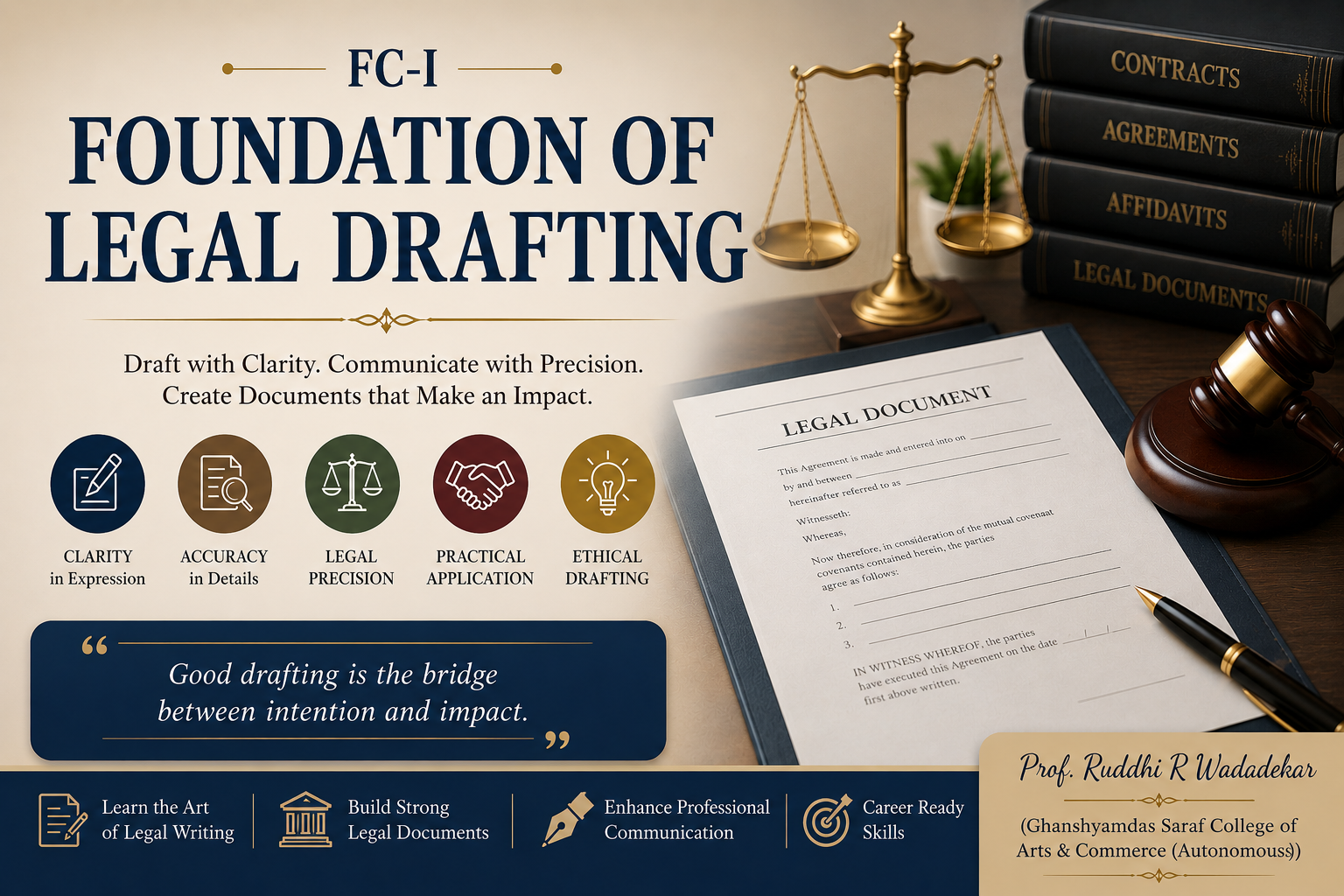
This subject introduces students to the basic principles and techniques of legal drafting, focusing on the correct format, structure, and language of various legal documents commonly used in business and professional settings. Students will learn to draft simple legal documents such as notices, affidavits, contracts, agreements, and declarations with clarity and legal accuracy. Emphasis is placed on understanding legal terminology, logical organization, and compliance with legal standards. The subject aims to build foundational skills in legal writing that are essential for careers in commerce, banking, insurance, and management.
- Teacher: Ruddhi Wadadekar